
Furnace and Air Conditioner Replacement: Our Completed Jobs
Every photo on this page comes from a job our own technicians completed. No stock images, no showroom equipment, no tidied-up demonstration basements. Real closets, real side yards, and the equipment exactly as we left it.
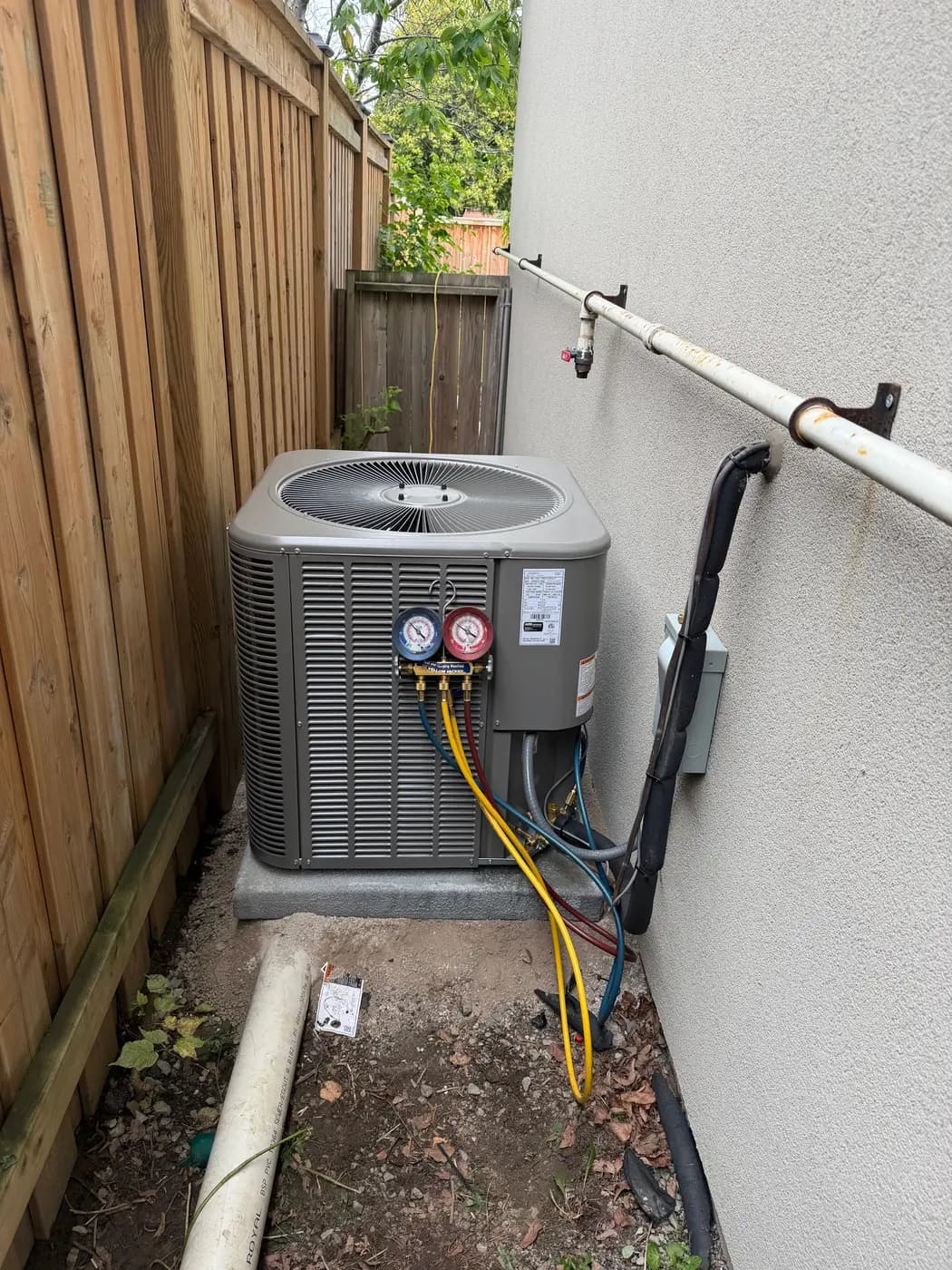
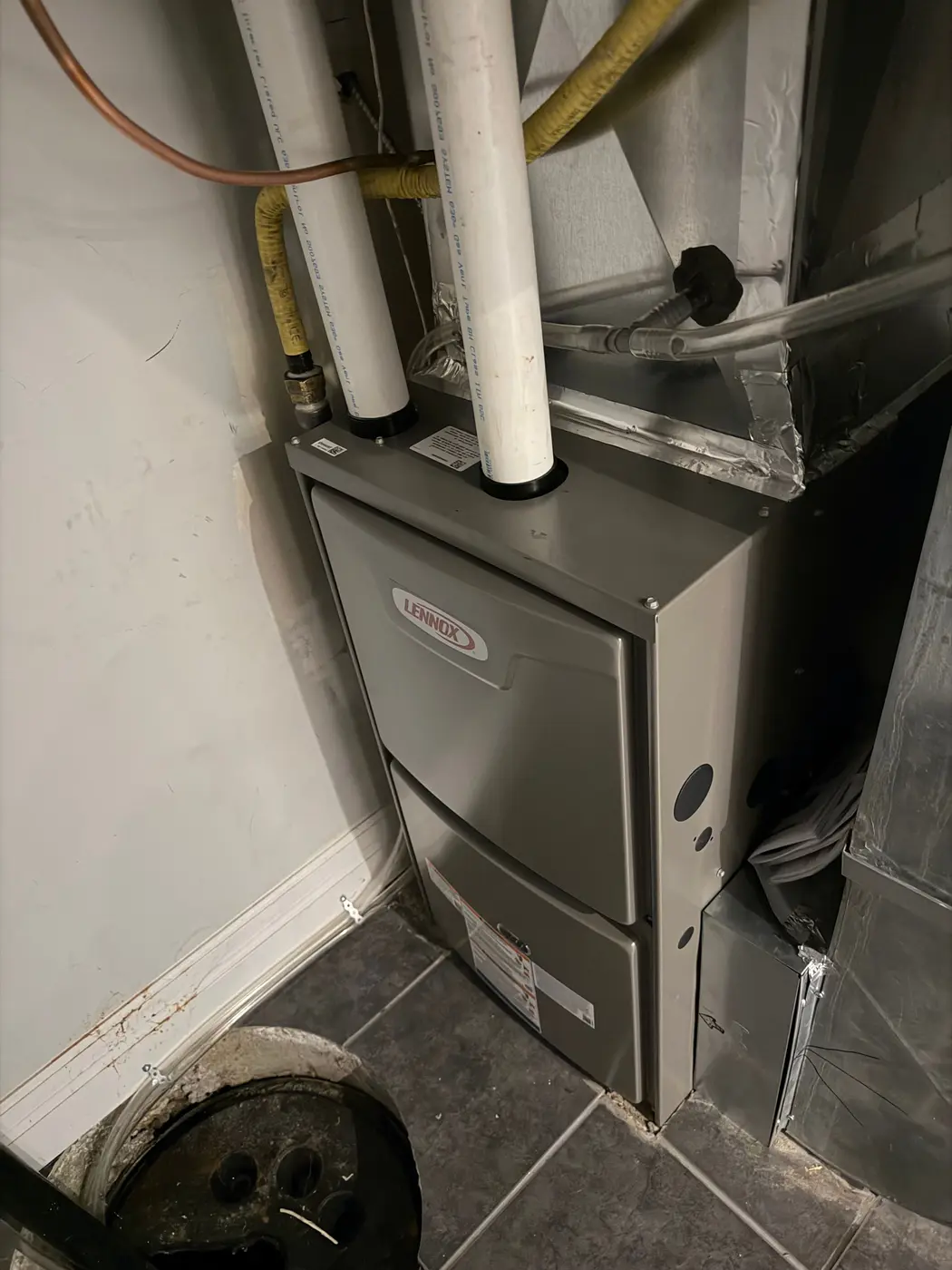
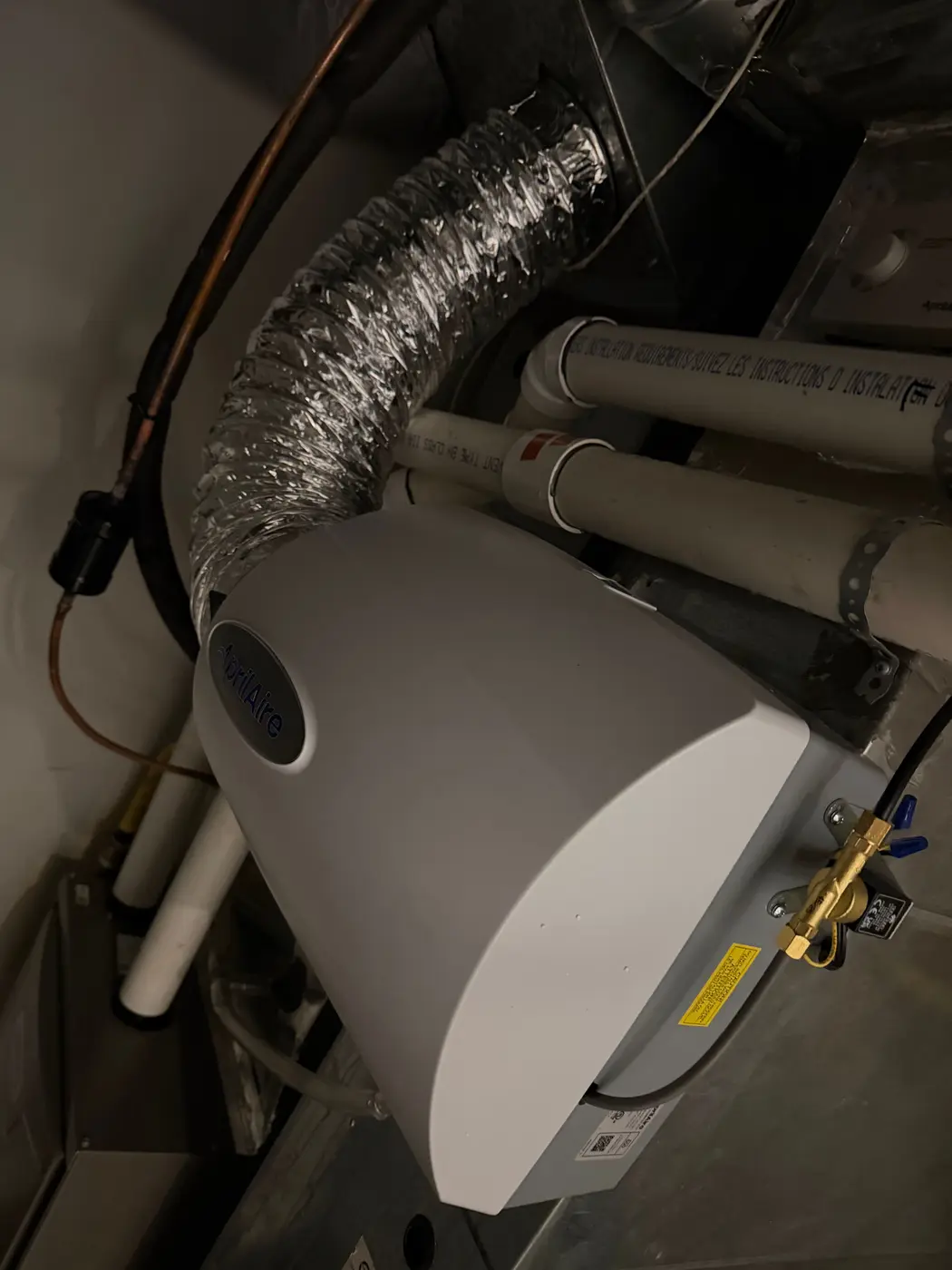
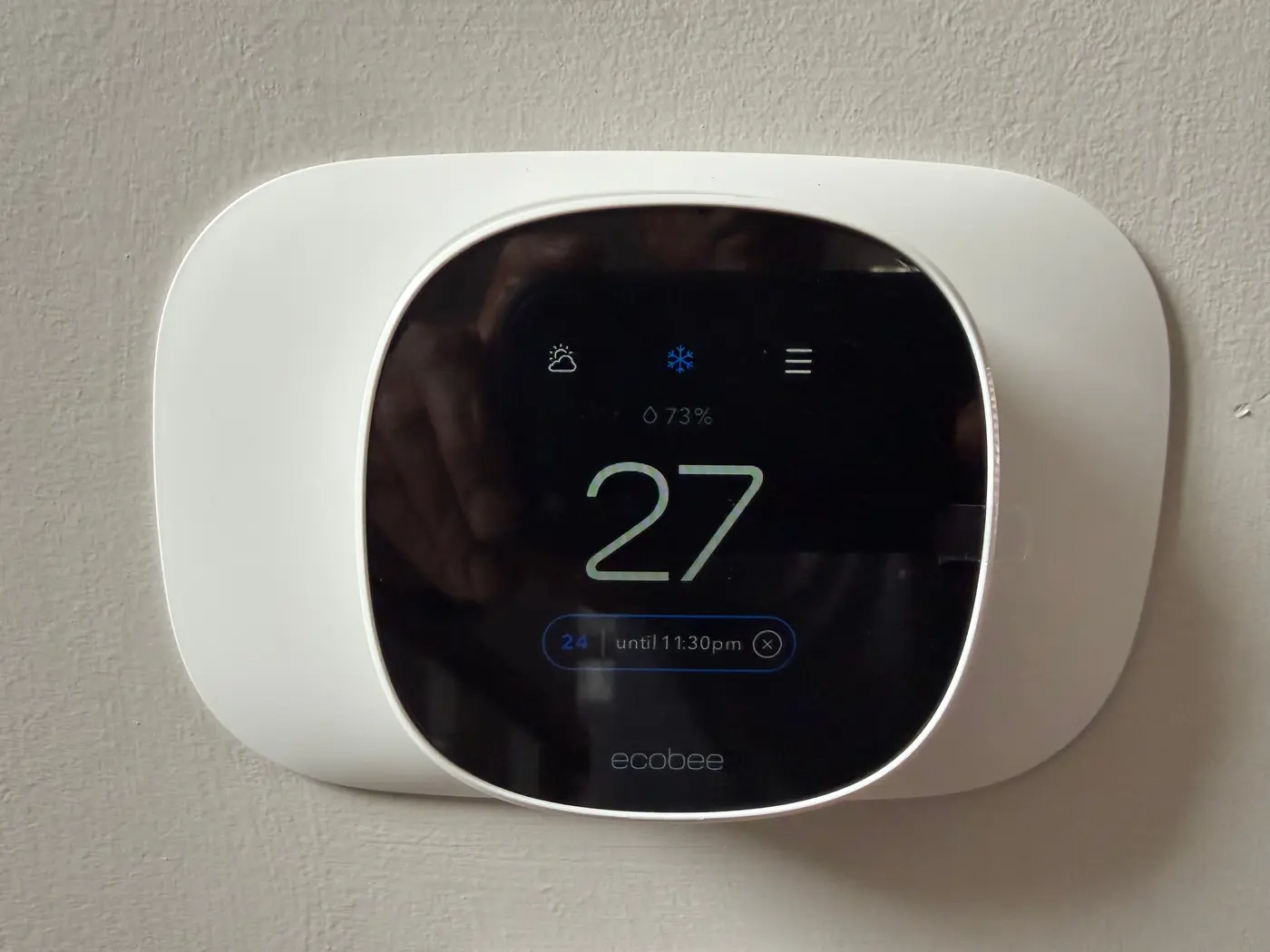
Complete HVAC system replacement: furnace, air conditioner, humidifier and thermostat
The homeowners replaced their heating and cooling in one visit rather than in stages. Doing both together means one set of line-set and electrical work, one commissioning visit, and a furnace and air conditioner that are matched to each other instead of paired years apart.
What we installed
- Lennox gas furnace, condensing, two-pipe direct vent
- Lennox ML14XC1 air conditioner, 2 ton
- AprilAire bypass humidifier on the supply plenum
- ecobee smart thermostat
Air conditioner service call: refrigerant pressure check and recharge
A service visit in steady rain. The gauges are on the unit to read suction and liquid pressures, which is how a technician tells low refrigerant apart from a failing capacitor, a dirty coil or a blower problem that all present as "it stopped cooling". The cylinder on the ground is the refrigerant being weighed in.
What we installed
- Refrigerant pressure diagnosis on the outdoor unit
- Refrigerant weighed in to the manufacturer's charge
- Electrical disconnect and line set checked
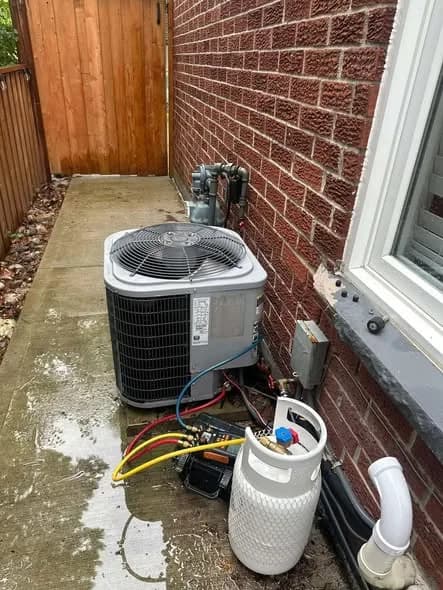
Worth being straight about what a recharge means. A sealed system does not consume refrigerant, so if the charge is low, it escaped somewhere. Adding refrigerant restores cooling today, but it is a temporary measure on its own, and we would rather find the leak and repair it than sell you the same top-up every summer. If your system is low, ask whoever is holding the gauges where it went.
Tankless gas water heater installation in a utility closet
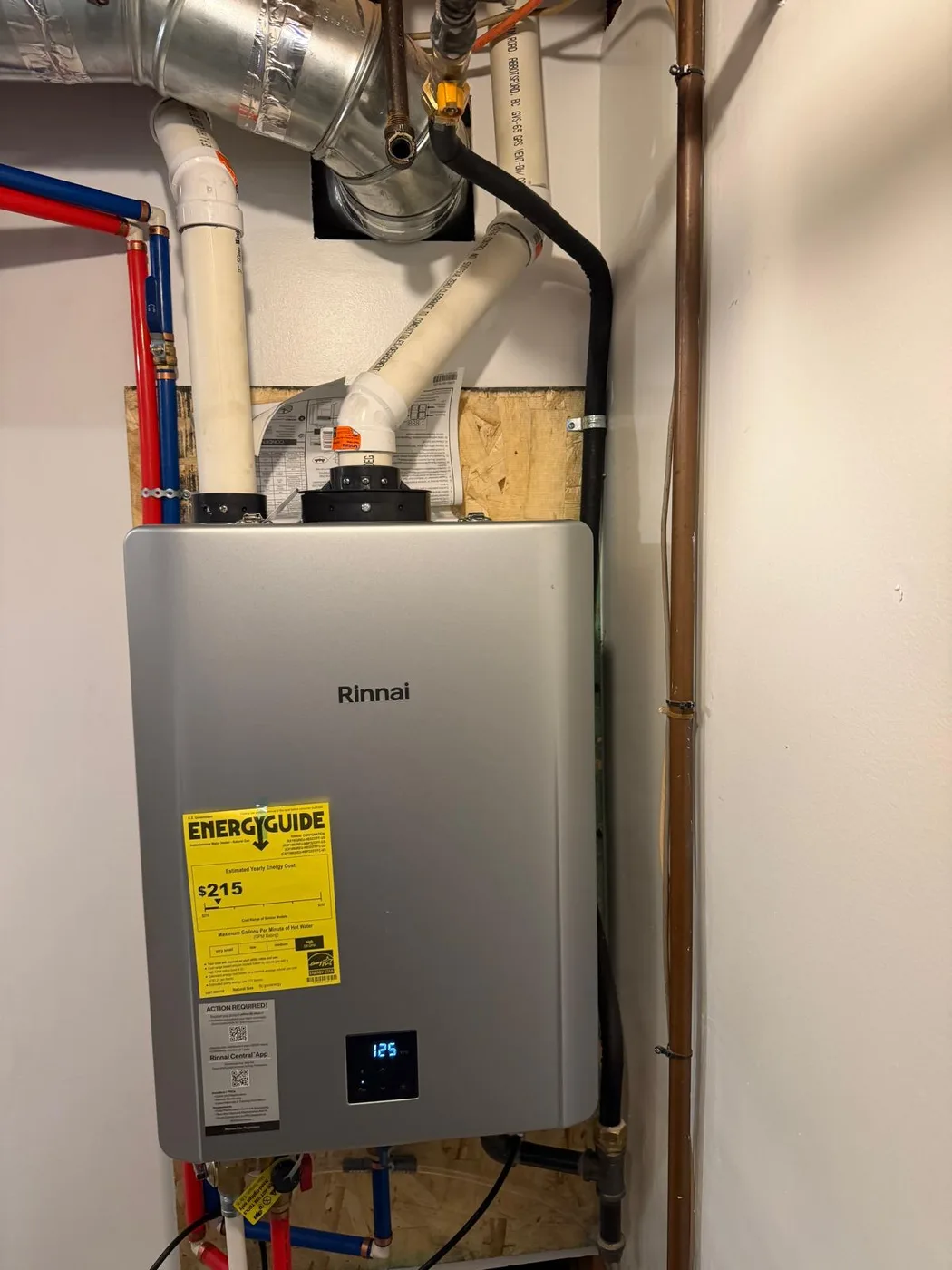
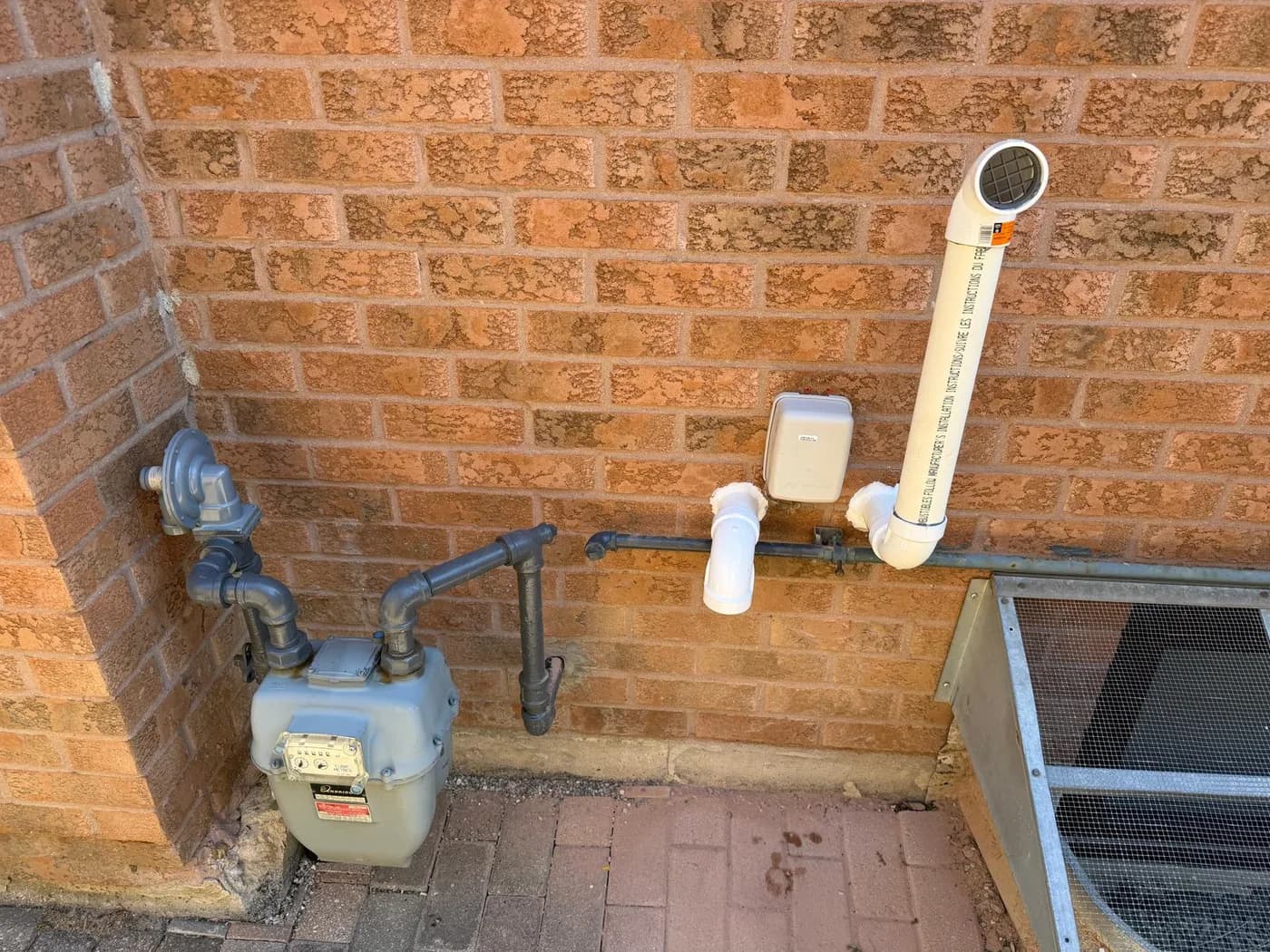
A wall-mounted Rinnai tankless water heater in a finished utility closet. A tankless unit heats water as it flows instead of keeping a tank of it hot, so it takes a section of wall rather than a corner of the floor, and this one vents out through the side of the house in PVC pipe.
What we installed
- Rinnai tankless gas water heater, wall-mounted
- Two-pipe PVC venting: separate air intake and exhaust
- Side-wall vent terminations through the brick
- Gas supply and hot and cold water connections
Rinnai RX199i tankless water heater installation
A Rinnai RX199i tankless water heater on an unfinished basement wall. It is a direct vent unit, so it takes its combustion air from outside through one PVC pipe and sends the exhaust out through the other, and it fires anywhere from 15,000 to 199,000 BTU an hour to match how much hot water is being drawn.
What we installed
- Rinnai RX199i tankless water heater, natural gas
- Direct vent: separate PVC air intake and exhaust
- Gas supply with a manual shut-off valve at the unit
- Gas piping pressure-tested and the test recorded on the unit
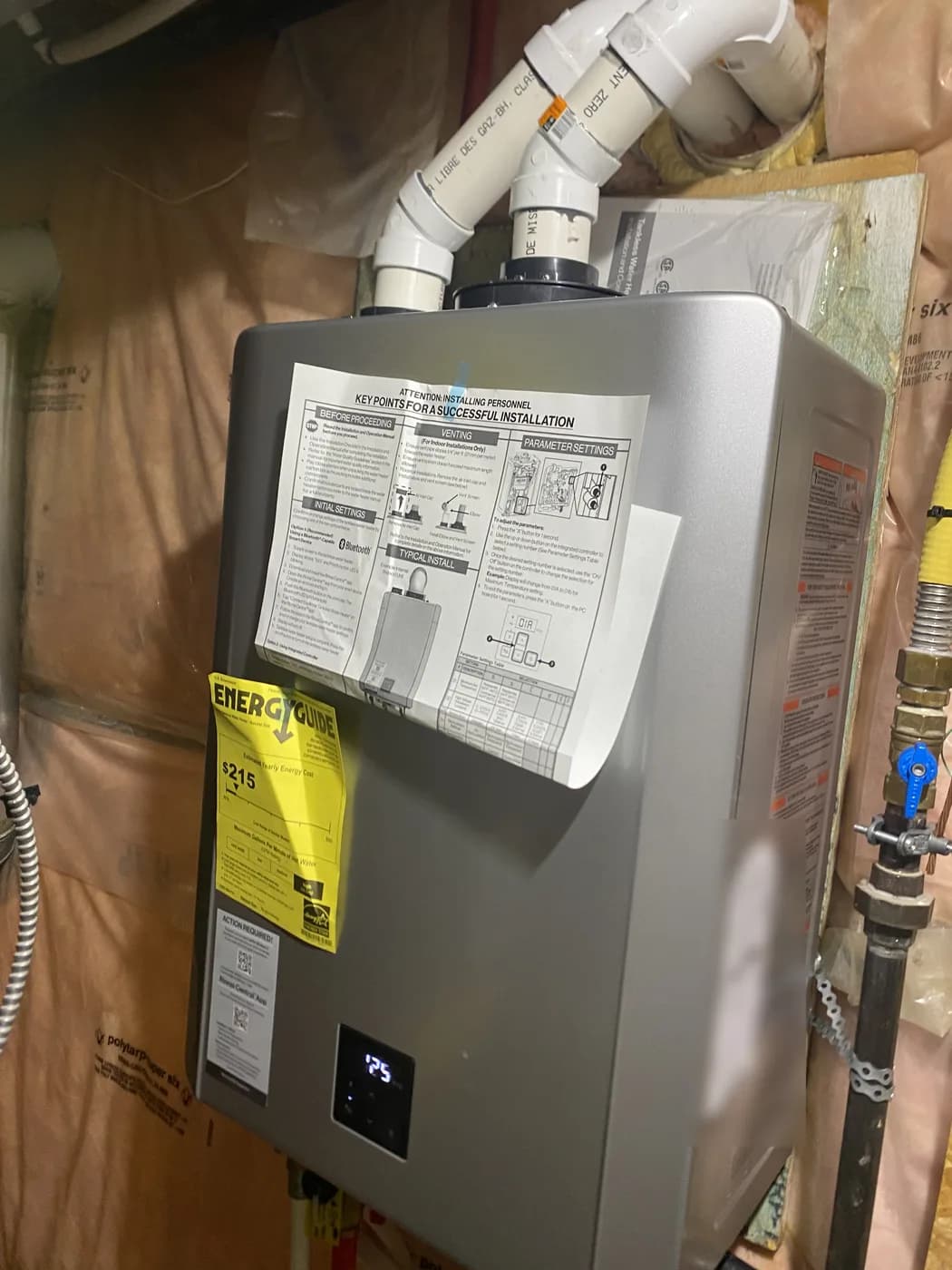
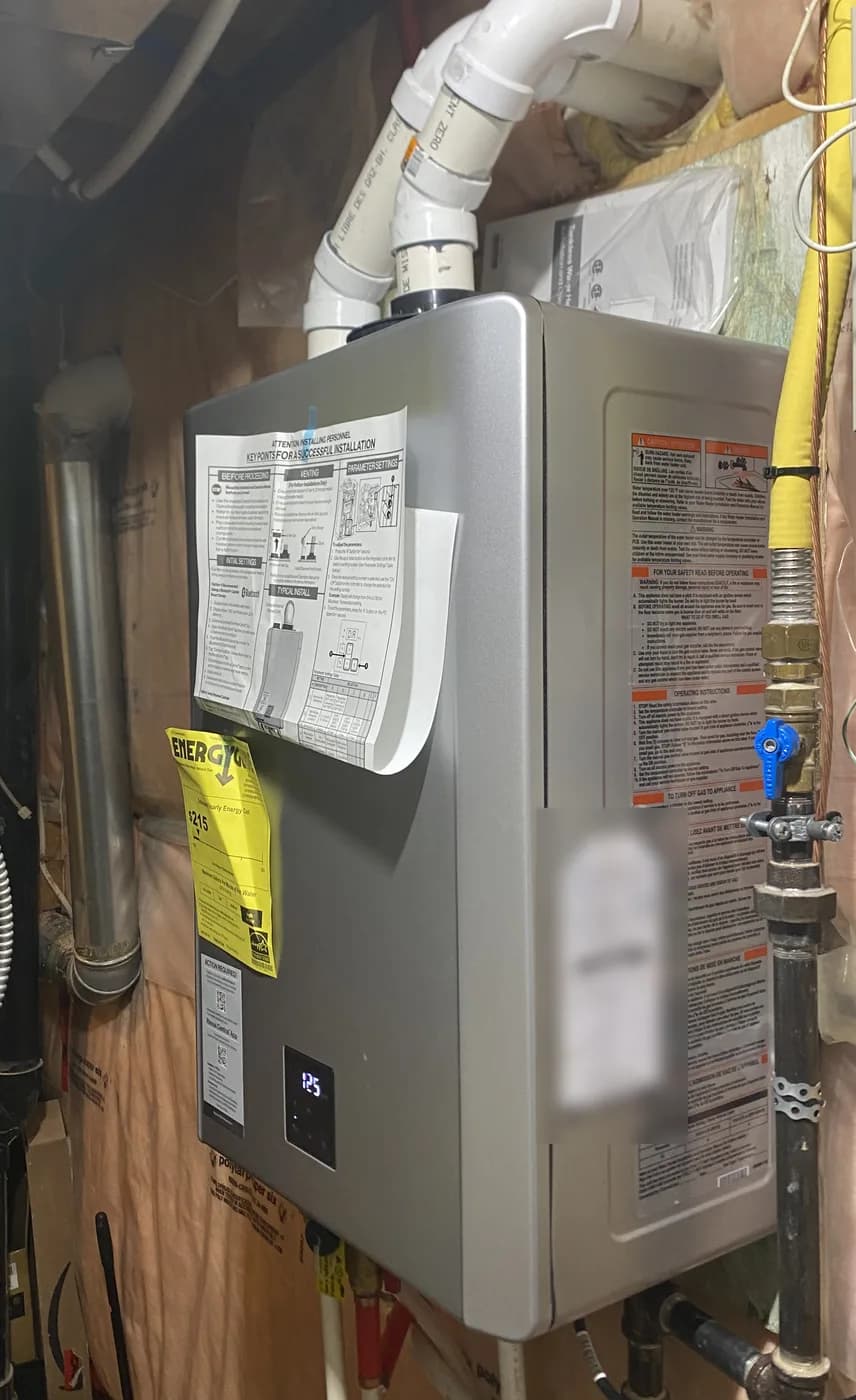
This unit's data plate lists a maximum input of 199,000 BTU an hour, more gas than most home furnaces burn at full fire. That is why we check the existing gas line before quoting a tankless heater: if it is too small, you hear about it in the quote, not on install day.
How long does it take to install a furnace and air conditioner?
A furnace replacement on its own takes 4 to 8 hours. A central air conditioner takes 4 to 6. Replacing both in the same visit does not double that, because the crew is already on site with the ducts open and the electrical disconnected, so a combined job is normally one full day rather than two.
The four system replacement photos above were taken within six minutes of each other, at handover, with the thermostat already holding its setpoint. That last part matters more than it sounds. Commissioning is where a technician verifies the refrigerant charge and watches the system actually pull the house down to temperature, and it is the step most often skipped when a crew is racing to the next job.
Older homes take longer when the existing ductwork, gas line or electrical service needs work first. We tell you that at the assessment rather than discovering it on install day.
What does a furnace and air conditioner replacement cost?
It depends on the size of the house, the efficiency you choose and what the existing ducts and gas line need. Rather than repeat a price range here, we keep every current figure in one place: see the HVAC pricing guide for equipment and installation costs, and the rebates page for what comes back off the total.
Want work like this in your home?
Book a free in-home assessment. We measure the house, size the equipment to it, and give you a written quote with the rebates already applied.
Planning the same upgrade? Read what a new furnace costs in Ontario, compare a heat pump against a gas furnace, or check the rebates you can claim.