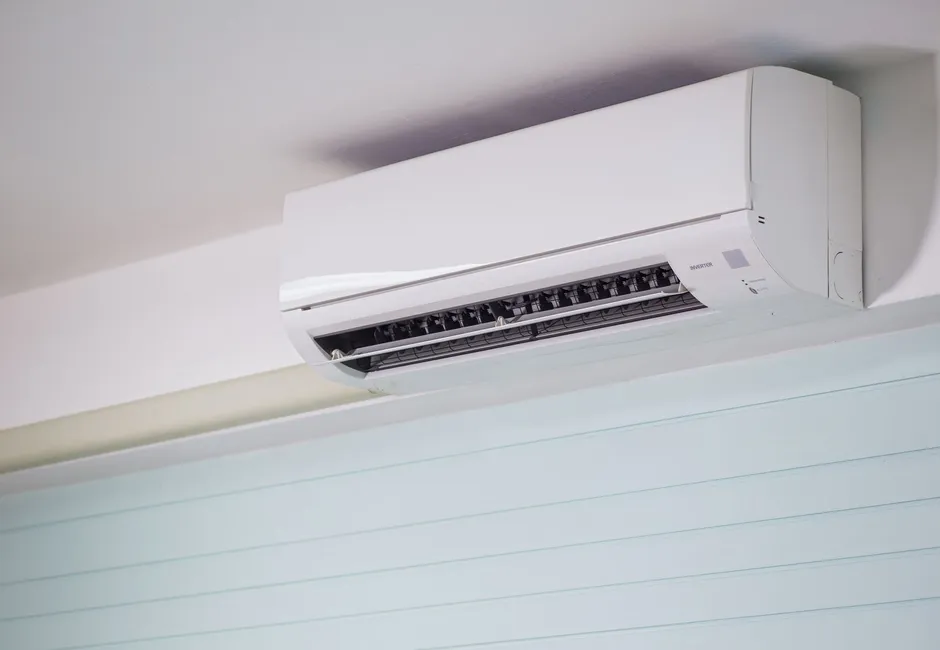
You have probably seen one without knowing what it was: a slim white box mounted high on a wall in a condo, a basement apartment or a renovated older house, with no floor vents anywhere in the room. That is a ductless air conditioner, and the reason it exists is simple. It cools rooms that have nowhere to put a duct.
What a ductless air conditioner is
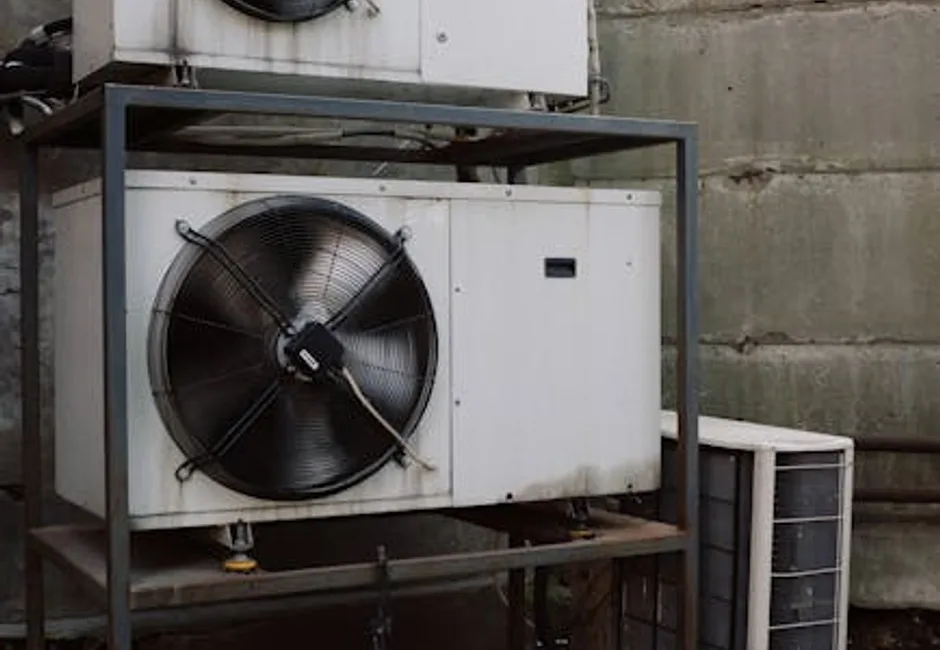
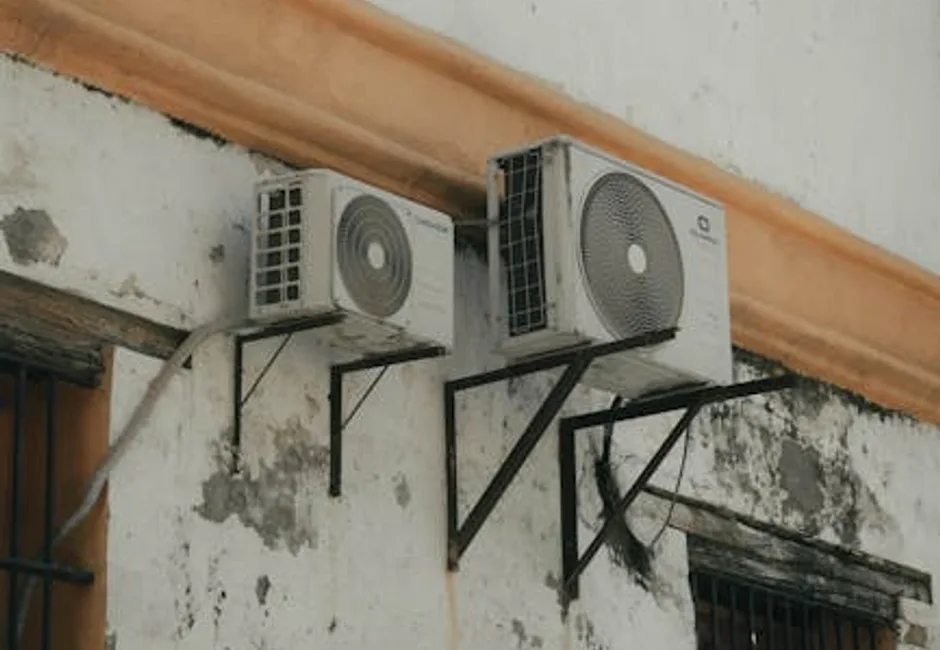
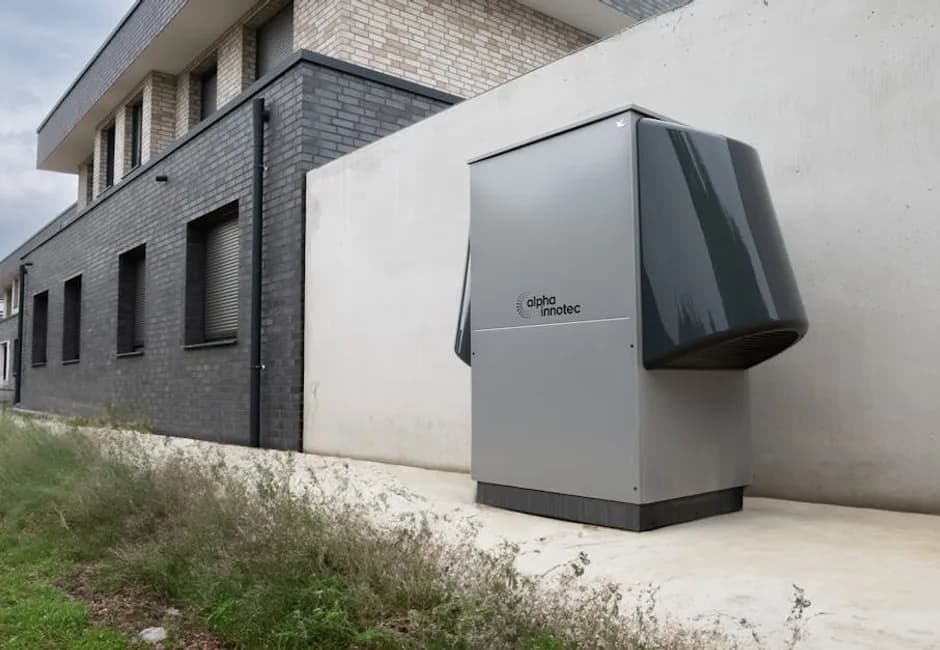
A ductless air conditioner is a cooling system built from two pieces instead of one. An outdoor unit sits against the wall of the house or on a pad, and one or more slim indoor heads mount inside the rooms you want cooled. A bundle carrying a refrigerant line, a power cable and a condensate drain joins them through a hole roughly three inches across.
That three-inch hole is the whole point. A central air conditioner needs a duct running to every room, which means either a house built with ductwork or a renovation that opens walls and ceilings to add it. A ductless air conditioner skips that entirely, which is why it turns up so often in homes that were never designed for forced air.
How a ductless air conditioner works
Nothing about the physics is exotic. The system does not create cold air. It moves heat out of the room and dumps it outside. Here is the cycle, start to finish.
- The indoor head draws room air across a coil filled with cold refrigerant.
- The refrigerant absorbs heat from that air and evaporates into a gas. The air leaving the head is cooler and drier, because moisture condenses on the cold coil and drains away.
- The gas travels through the refrigerant line to the outdoor unit, where a compressor raises its pressure and temperature.
- The outdoor coil releases that heat to the outside air, and the refrigerant condenses back into a liquid.
- The liquid returns indoors through the same line bundle, and the cycle repeats until the room reaches its setpoint.
A central system runs exactly the same cycle. The difference is what gets distributed. Central air moves cooled air through ducts to reach each room. A ductless air conditioner moves heat through a thin refrigerant line and does the cooling inside the room itself.
Ductless, mini-split, heat pump: one machine, three names
This is where most of the confusion starts, and it is worth clearing up before you read a quote. The three terms you will see are largely interchangeable.
- Ductless describes what it does not need. Manufacturers and retailers favour this word.
- Mini-split describes the shape: a system split between an indoor and an outdoor component, at a smaller capacity than commercial equipment. Installers say this one most.
- Ductless heat pump is the same hardware with the ability to run the cycle backwards and heat the room as well as cool it. Almost everything sold in Ontario now does this.
So a quote for a mini-split and a quote for a ductless air conditioner are quotes for the same category of equipment. Compare the capacity, the efficiency rating and the number of indoor heads rather than the label on the page.
Where ductless makes sense in an Ontario home
Ductless is not a compromise version of central air. It is the better answer in specific situations, and most of them are common in this province.
- Houses with radiators and no ducts. A great deal of pre-war housing in Ontario still runs hot water or steam heat. There is no duct network to attach central air to, so ductless is usually the only route to real cooling that does not involve opening up plaster.
- Condos and apartments. Limited outdoor space, no room for a furnace-and-coil setup, and building rules about what can go on a balcony. See our guide to ductless installation in Toronto condos for what building approval actually involves.
- Additions, garages and finished basements. Extending existing ductwork into a new space often cannot deliver enough airflow. A dedicated head solves it without touching the rest of the system.
- The one room that is always wrong. A west-facing bedroom that bakes in the afternoon, or a back room the central system never reaches, can get its own head and its own thermostat.
- Homes on electric baseboard heat. A ductless heat pump adds cooling and cuts the heating bill at the same time, because moving heat costs far less than generating it with resistance elements.
Does a ductless air conditioner heat as well as cool?
If it is a heat pump model, yes, and that is what makes ductless interesting beyond July. Reversing the refrigerant cycle lets the outdoor unit pull heat out of cold outside air and move it indoors. It works at temperatures that sound impossible until you remember the system moves heat rather than making it.
The number that matters in Ontario is rated capacity at low outdoor temperature. A unit rated generously at plus 8 Celsius tells you very little about a January night. Ask for the output at minus 15 and minus 25, and look specifically for a cold-climate rated model. Our guide to cold-climate heat pumps in Ontario winters covers what those ratings mean in practice.
What it costs, and what the rebates actually cover
A single-zone ductless system with one indoor head runs $3,500 to $5,500 installed for a 9,000 to 18,000 BTU unit. A multi-zone system with two to five heads on one outdoor unit runs $6,000 to $13,000 depending on head count. Our ductless mini-split cost guide breaks those ranges down properly.
Ductless or central: the short answer
If your home already has sound ductwork reaching every room you want cooled, central air is usually the cheaper path to whole-home cooling. If it does not, ductless costs less than retrofitting ducts and gives you per-room control that central air cannot match. For the full comparison, including the efficiency and rebate math, read ductless air conditioning vs central AC in Ontario.
Either way, sizing matters more than the brand. An oversized head cools the room quickly, shuts off before it has pulled out much humidity, and leaves the space cold and clammy. Sizing should come from the room, its windows and its exposure, not from a rule of thumb.
Ready to take the next step?
Book a Free Ductless Assessment?Frequently Asked Questions
What is a ductless air conditioner?
How does a ductless air conditioner work?
Is a ductless air conditioner the same as a mini-split?
Can a ductless air conditioner heat my house too?
How much does a ductless air conditioner cost installed in Ontario?
Do ductless air conditioners qualify for Ontario rebates?
Does a ductless air conditioner cool a whole house?
EcoFrost Heating & Cooling
Toronto's Trusted HVAC Experts Since 2015
Our certified HVAC technicians have served 5,000+ Toronto-area homes. We write about heating, cooling, and air quality from real field experience not marketing copy. Learn about us →