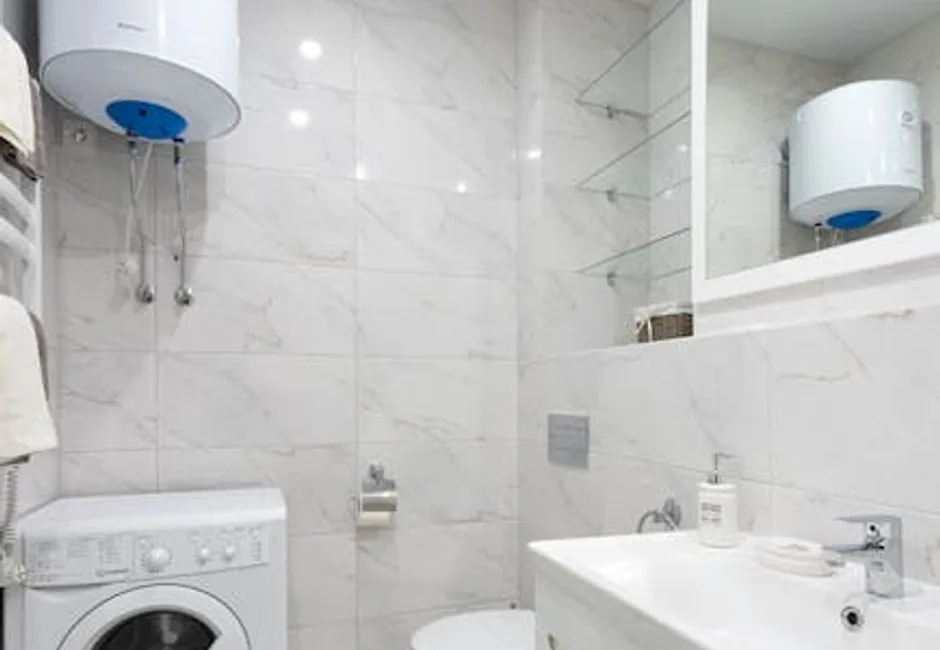
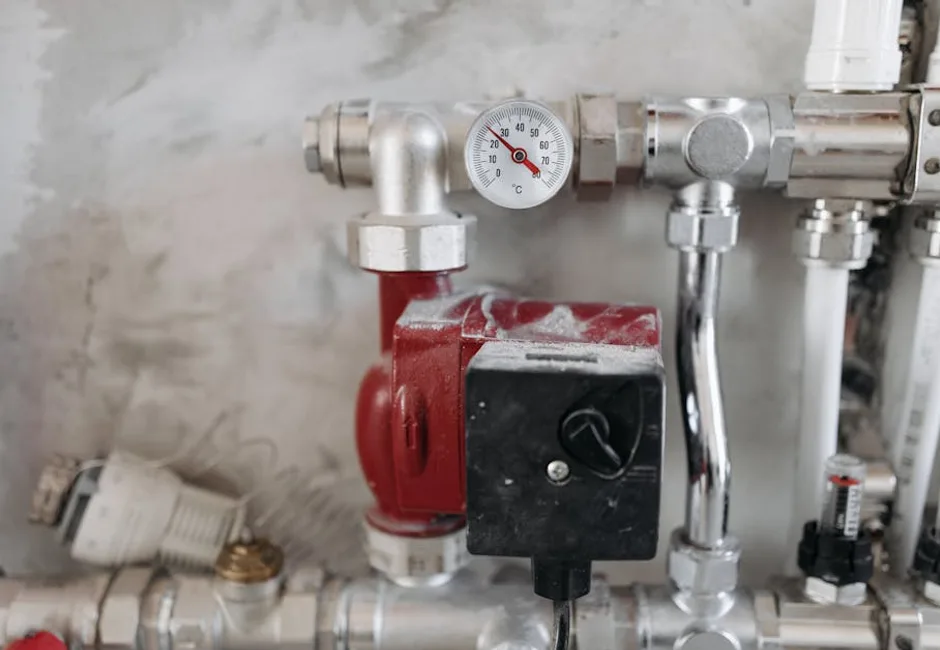
A leaking water heater ranges from a minor, fixable drip to a failing tank that needs replacing. The good news is that where the water is coming from tells you which. A leak from the top is often a loose fitting or a valve you can address; a leak from the bottom of the tank usually means internal corrosion, which cannot be repaired. This guide helps you find the source, act safely, and decide whether to repair or replace.
First Steps: Make It Safe
- Turn off the power or gas: for an electric unit, switch off its breaker; for a gas unit, turn the gas control to the OFF or pilot position.
- Turn off the cold water supply: close the shut-off valve on the cold inlet at the top of the tank so no more water feeds the leak.
- Contain the water: mop up standing water and keep it away from electrical outlets and the furnace.
- Then diagnose where the leak is coming from.
Leaking from the Top
A leak at the top of the tank is often repairable. The usual sources are loose cold-inlet or hot-outlet fittings, a leaking temperature and pressure (T&P) relief valve, or condensation on a gas unit. Tightening a fitting or replacing a valve can solve it. Top leaks are worth a technician visit because they are frequently a repair rather than a full replacement.
Leaking from the Bottom
A leak from the bottom of the tank is the more serious one. It usually means the steel tank has corroded internally and water is escaping through the shell, which cannot be repaired; the unit needs replacing. Before assuming the worst, rule out two fixable bottom-area sources: a leaking drain valve (the spigot near the base) and water that ran down from a T&P valve discharge. If it is the tank body itself, plan for a replacement.
Pressure Relief (T&P) Valve Leaking
The temperature and pressure relief valve is a safety device that releases water if the tank gets too hot or over-pressurized. A little discharge can be normal, but a steady drip means either the valve is doing its job because pressure or temperature is too high (a real problem to diagnose) or the valve itself has failed and needs replacing. Do not cap or plug this valve; it is a critical safety component.
Is a Leaking Water Heater Dangerous?
A slow leak is mostly a water-damage and mould risk, but it can become dangerous: water near the electrical connections of an electric unit or near a gas burner is a hazard, and a tank leaking because of over-pressure is a safety issue. Shut off the power or gas and the water supply, and if you smell gas, leave and call Enbridge at 1-866-763-5427. A tank can also fail suddenly and flood, so a bottom leak should not be ignored.
Repair or Replace?
- Repairable: loose fittings, a failed drain valve, or a failed T&P valve on an otherwise sound tank.
- Replace: a tank leaking from the bottom shell (internal corrosion), or any tank near or past its 8 to 12 year lifespan.
- Rule of thumb: if the tank body is leaking or the unit is over 10 years old, replacement is the sensible call. A new tank runs about $1,400 to $2,200 installed.
When to Call a Technician
Call EcoFrost once you have shut off the water and power or gas. We identify whether it is a repairable valve or fitting or a failed tank, and we replace gas, electric, and tankless water heaters across the GTA, often same day. If the tank is leaking from the bottom, do not wait, as it can fail and flood.
Ready to take the next step?
Book Water Heater Service?Frequently Asked Questions
Why is my water heater leaking?
Is a leaking water heater dangerous?
My water heater is leaking from the bottom. Can it be fixed?
What do I do if my water heater is leaking?
How much does it cost to replace a leaking water heater?
EcoFrost Heating & Cooling
Toronto's Trusted HVAC Experts Since 2015
Our certified HVAC technicians have served 5,000+ Toronto-area homes. We write about heating, cooling, and air quality from real field experience not marketing copy. Learn about us →