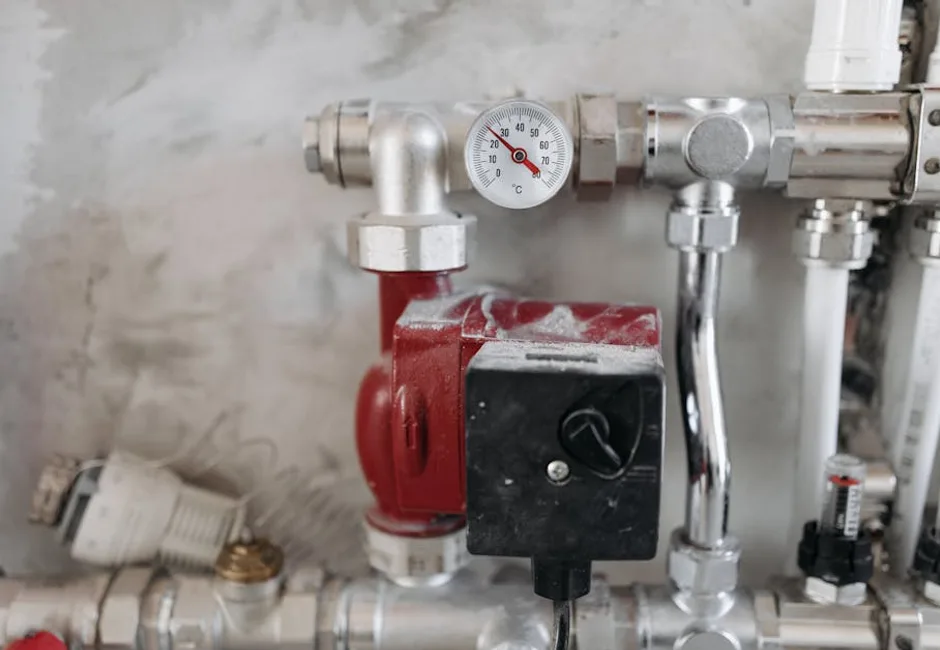
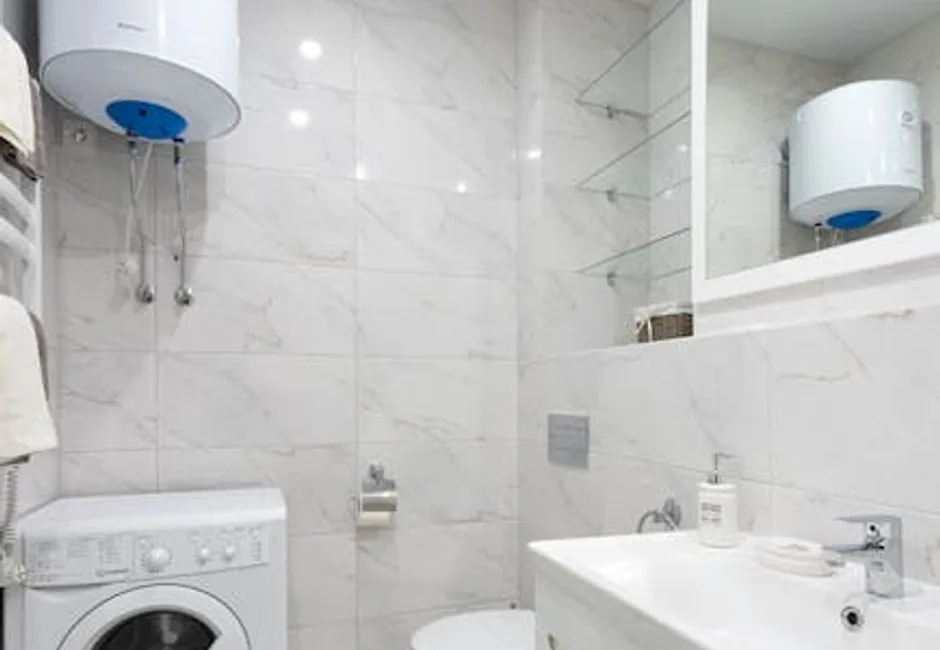
The tank versus tankless decision comes down to a trade-off: a tank costs less to install but lasts about half as long and can run out of hot water, while a tankless costs more upfront but lasts 20 years or more and delivers endless hot water at a lower operating cost. The right choice depends on your budget, hot-water demand, and how long you plan to stay in the home.
Quick Verdict
- Choose a tank if you want the lowest upfront cost and have modest, predictable hot-water use.
- Choose a tankless if you want endless hot water, the longest lifespan, lower running cost, and to reclaim floor space.
- For most GTA homes with a gas line staying long term, a gas tankless wins on lifetime cost. For a rental or a short-stay home, a tank is the value pick.
Tank vs Tankless: Side by Side
| Factor | Tank | Tankless |
|---|---|---|
| Upfront installed cost | $1,400 - $2,200 | $2,800 - $5,500 |
| Lifespan | 8 to 12 years | 20+ years |
| Hot water supply | Limited to tank size | Endless, on demand |
| Energy efficiency | Lower (standby heat loss) | Higher (heats on demand) |
| Space used | Large floor unit | Small, wall-mounted |
| Maintenance | Occasional flush | Annual descaling (hard water) |
When a Tank Water Heater Wins
- Lowest upfront cost: a tank is roughly half the installed price of a tankless.
- Simple replacement: swapping an old tank for a new one is fast and needs no gas line or venting upgrades.
- Rentals and short stays: if you will not be in the home long enough to recover the tankless premium, a tank makes more sense.
- Modest, predictable demand: a correctly sized tank handles a smaller household fine.
When a Tankless Water Heater Wins
- Endless hot water: back-to-back showers and laundry at once, with no cold surprise.
- Longest lifespan: 20+ years versus 8 to 12 for a tank, so it often outlasts two tanks.
- Lower operating cost: no standby heat loss from keeping a tank hot around the clock.
- Space savings: a wall-mounted unit frees up the floor area a tank occupies.
- Long-term homes: the higher upfront cost pays back over the longer life for owners staying put.
Cost Over 20 Years
Upfront, a tank wins. Over 20 years the math shifts: a tank typically needs replacing once or twice in that span, while a single tankless unit usually lasts the whole period at a lower monthly operating cost. For a long-term homeowner with a gas line, the lifetime cost often favours tankless. For details, see our tankless installation cost guide and our best tankless water heater brands guide.
The Ontario Question: Is Yours Rented?
Most of the water heater comparisons online are written for American homeowners who own the appliance outright. In Ontario a large share of tanks are rented, and if yours is, the whole comparison changes shape before you get to efficiency or flow rate.
A rental is an open-ended payment stream. The tank is cheaper to install than tankless, which is the usual argument for staying with one, but on a rental you are not comparing a one-time $1,400 to $2,800 against a one-time $2,800 to $5,500. You are comparing an owned appliance against payments that continue for as long as the tank is in the basement, and that keep going after the appliance has paid for itself several times over.
Find out before you shop
- Check whether there is a rental provider sticker on the tank and a rental line on your gas or hydro bill. If there is, you do not own it
- Ask the provider for the current buyout figure in writing. It usually declines with the age of the unit, and it is the number that decides whether switching makes sense this year or in three years
- Ask specifically about exit and removal fees. Ending a rental early and having the old tank collected are sometimes billed separately
- Confirm who owns the venting and the water connections, because on some agreements the provider owns more than the tank itself
- Get all of it in writing before anyone quotes you on a replacement, including us
Once you know the buyout, the decision becomes arithmetic rather than opinion. Add the buyout to the cost of the new appliance, then weigh that against what the rental would cost you over the years the new unit would last. A tankless unit commonly runs 20 years against 8 to 12 for a tank, so the comparison window is long enough that the rental stream usually dominates it.
What About Rebates?
Be careful with rebate claims. A conventional gas or electric tank, and a conventional tankless, have no active 2026 Ontario rebate; the legacy Enbridge HER+ rebate closed December 31, 2025. The only active water-heating rebate is $500 through the Home Renovation Savings Program for a heat-pump water heater, which is a tank-style electric unit. See the current Ontario rebates.
Which Should You Choose?
- Long-term home, gas line, want endless hot water: gas tankless.
- Lowest upfront cost or a rental: gas or electric tank.
- No gas line, want efficiency and the rebate: heat-pump water heater (tank style).
- Large family with high simultaneous demand: tankless, sized for winter inlet water.
Ready to take the next step?
Get a Free Water Heater Quote?Frequently Asked Questions
Is a tankless water heater better than a tank?
How much more does a tankless water heater cost than a tank?
Does a tankless water heater ever run out of hot water?
Is a tankless water heater worth it in Ontario?
How long do tank and tankless water heaters last?
EcoFrost Heating & Cooling
Toronto's Trusted HVAC Experts Since 2015
Our certified HVAC technicians have served 5,000+ Toronto-area homes. We write about heating, cooling, and air quality from real field experience not marketing copy. Learn about us →