If you live in Mississauga, Brampton, or Oakville, your water carries noticeable hardness. The Region of Peel's 2025 South Peel report puts tap water hardness at about 120 to 130 milligrams per litre (about 7 to 7.6 grains per gallon), which is moderately hard and right around the 120 mg/L level where scale becomes noticeable. That mineral load is slowly scaling your water heater, clogging your showerheads, leaving white residue on everything, and shortening the life of every appliance that touches water in your home. A whole-home water softener eliminates the problem at the source.
How Hard Is the Water in Mississauga?
Peel Region draws water from Lake Ontario and treats it at the Arthur P. Kennedy and Lorne Park water treatment plants. While the treatment removes bacteria and contaminants, it does not remove calcium and magnesium minerals, which are what cause hardness. The result is moderately hard water, at about 120 to 130 mg/L.
| Hardness Level | mg/L (ppm) | Grains Per Gallon (GPG) | What It Means |
|---|---|---|---|
| Soft | 0 to 60 | 0 to 3.5 | Ideal for appliances and skin |
| Moderately Hard | 61 to 120 | 3.5 to 7 | Minor scaling over time |
| Hard | 121 to 180 | 7 to 10.5 | Visible scale, appliance wear |
| Very Hard | 181 to 250+ | 10.5 to 14.6+ | Rapid scaling, reduced appliance life |
| Mississauga Average (South Peel, 2025) | 120 to 130 | 7 to 7.6 | Moderately hard, near the line with "hard" |
What Hard Water Is Actually Doing to Your Home
Hard water damage is gradual and often invisible until something fails. These are the real costs Mississauga homeowners deal with:
- Water heater efficiency drops as scale builds up on the heating element or tank interior, raising your gas or electricity bill
- Tank water heaters in hard-water areas can fail sooner than their rated lifespan as sediment and scale build up
- Showerheads and faucet aerators clog with calcium deposits within months, reducing water pressure
- Dishwashers and washing machines accumulate scale inside pumps and heating elements, shortening their service life
- Clothes washed in hard water wear out faster and feel stiff; detergent does not lather as well so you use more
- Skin and hair feel dry after showering because calcium binds with soap and leaves a film instead of rinsing clean
- White chalky deposits appear on shower glass, faucets, tiles, and countertops within days of cleaning
How a Whole-Home Water Softener Works
A salt-based ion exchange water softener is the most effective and widely used whole-home solution. The unit sits on your main water supply line (typically in the basement or utility room) and treats all water entering the home before it reaches any tap, appliance, or fixture.
Types of Water Softeners Available for Mississauga Homes
Salt-Based Ion Exchange Softeners
The gold standard for hard water treatment. Fully removes hardness minerals, eliminates scale, and provides genuinely soft water throughout the home. Requires periodic salt top-ups (roughly one bag per month for an average family). Works well at Mississauga's hardness of about 120 to 130 mg/L.
Salt-Free Water Conditioners (Template-Assisted Crystallization)
These systems do not remove hardness minerals; instead they change the structure of calcium crystals so they cannot stick to surfaces. They prevent new scale from forming but do not soften the water in the traditional sense. Useful for homeowners who want to avoid adding sodium to their water, but less effective than a true softener. Skin and hair will not feel the same improvement as with a true softener.
Dual-Tank Softeners
Homes with very high water usage (large families, home businesses) benefit from dual-tank systems, which ensure one tank is always in service while the other regenerates. No downtime, continuous soft water 24 hours a day.
Water Softener Installation Cost in Mississauga (2026)
Total installed cost depends on the system capacity, brand, and the complexity of the plumbing in your home. Below are realistic estimates for Mississauga and Peel Region homeowners:
| System Type | Unit Cost | Installation Labour | Total Installed |
|---|---|---|---|
| Entry-level salt-based (32,000 grain) | $400 to $700 | $350 to $500 | $750 to $1,200 |
| Mid-range salt-based (48,000 grain) | $700 to $1,100 | $350 to $500 | $1,050 to $1,600 |
| High-efficiency demand-initiated | $900 to $1,500 | $400 to $600 | $1,300 to $2,100 |
| Salt-free conditioner | $600 to $1,200 | $300 to $500 | $900 to $1,700 |
| Dual-tank system | $1,500 to $2,500 | $500 to $700 | $2,000 to $3,200 |
Prices above do not include HST. Ongoing operating costs are low: roughly $5 to $15 per month in salt, plus water used during regeneration cycles (typically 50 to 75 litres per cycle, 2 to 3 times per week for an average family).
Is a Water Softener Worth It in Mississauga?
For many Mississauga homeowners, yes, though at Peel's moderate hardness the payback is slower than in very hard-water areas. Here is a rough look:
| Benefit | Annual Saving Estimate |
|---|---|
| Water heater energy savings (less scale) | $40 to $80 per year |
| Extended water heater lifespan | $40 to $80 per year amortized |
| Reduced soap, detergent, and shampoo use (less needed) | $50 to $100 per year |
| Appliance longevity (dishwasher, washer, ice maker) | $30 to $60 per year amortized |
| Reduced cleaning products for scale removal | $20 to $40 per year |
| Total estimated annual savings | $180 to $360 per year |
At an installed cost of $1,000 to $1,600 for a mid-range system, most Mississauga homeowners see payback in roughly 3 to 9 years and then enjoy net savings for the lifetime of the system (typically 15 to 20 years with proper maintenance).
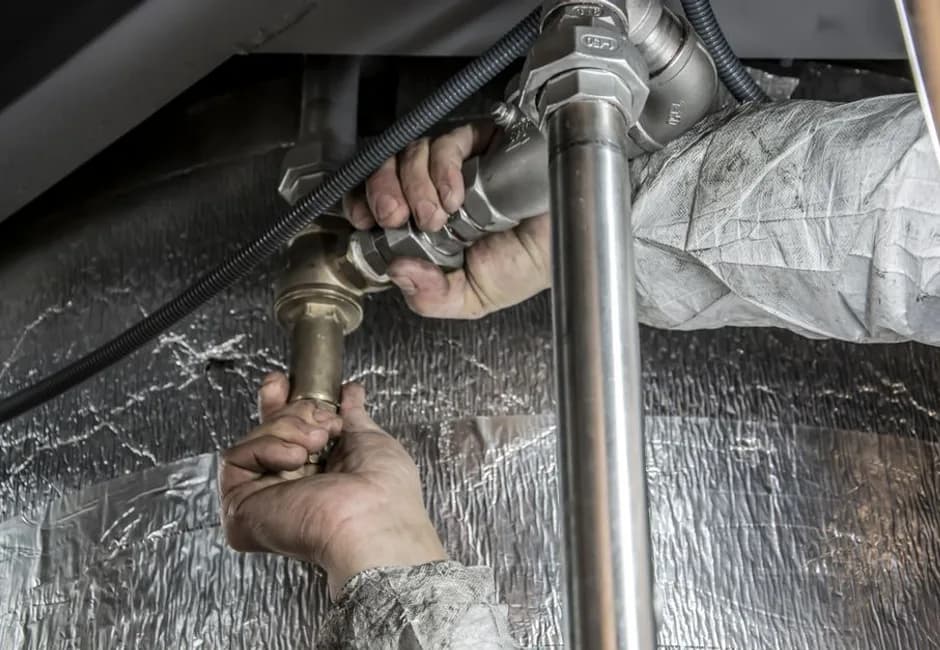
What the Installation Process Looks Like
Water Softener Maintenance: What Is Required
- Add salt to the brine tank every 4 to 6 weeks (one 20 kg bag typical for average family)
- Check for salt bridges (a hard crust that forms over the brine) every few months and break them up if present
- Clean the brine tank with soapy water once per year to remove sediment and sludge from the bottom
- Replace the resin bed every 10 to 15 years, or sooner if iron in the water has fouled it
- Use resin cleaner or iron-out treatment if you notice reduced softening effectiveness
- Test your water hardness once per year to confirm the system is performing correctly
Ready to take the next step?
Get a Free Water Softener Quote in Mississauga?Frequently Asked Questions
How hard is the water in Mississauga?
Do I need a plumber or HVAC company to install a water softener?
Will a water softener make my water taste salty?
Can I install a water softener if I have a well?
What size water softener do I need for a Mississauga home?
EcoFrost Heating & Cooling
Toronto's Trusted HVAC Experts Since 2015
Our certified HVAC technicians have completed 15,000+ installs across the Toronto area. We write about heating, cooling, and air quality from real field experience not marketing copy. Learn about us →